


Online Mix Review Services: What You’re Actually Paying For (AI vs. Human Feedback)
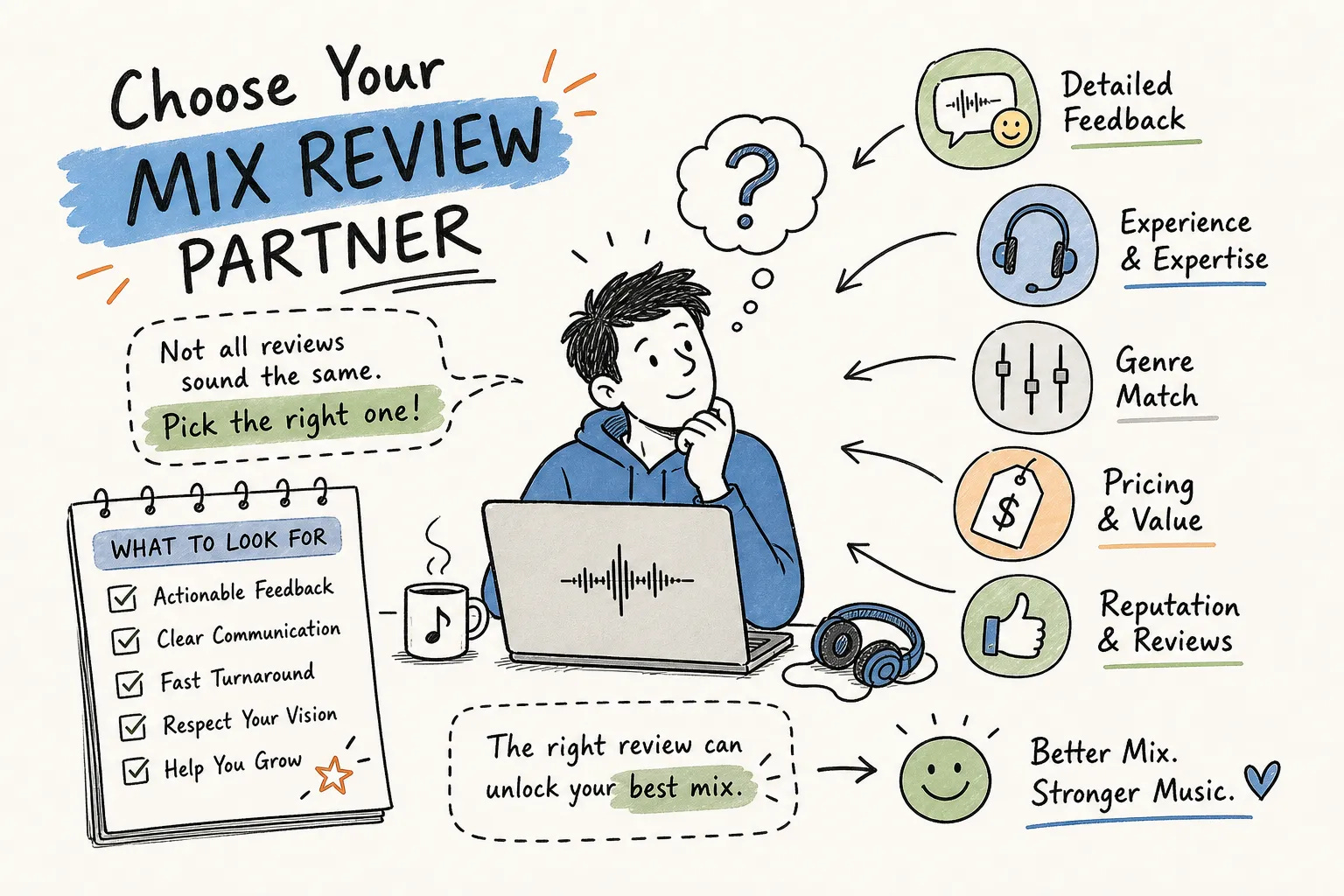
When I first got started making music, I don’t know how I got my tracks to pass the ‘car test,’ but it was crazy inconsistent. I'd play something in my studio (which wasn't treated at all), then reference it in my car and wonder where everything went, lol. Eventually I got to a point where I slapped so much processing on that I couldn't really tell what was good; I just knew it sounded kindof how I wanted it to sound, and I was getting relatively consistent requests for music.
But were my mixes really good, or just familiar? After using the VXT8 monitors for some time, I knew what I wanted to get out of them, and I was referencing in my car. But those were the only systems I was testing. What about mobile? What about laptop speakers and iPhone speakers?
I eventually decided that I needed dedicated feedback and to actually have a ‘real engineer’ handle my work, so I could get a grasp of what my mix needed to sound like to translate across every system.
Over the years, I’ve used plugins, studio engineers, and AI algorithms to better understand and affirm some principles in mixing.
TLDR
An online mix review service is either a critique (written or recorded notes, your audio untouched) or a revision (an engineer reworks your session). AI tools like Mix Check Studio give fast technical data; human engineers add creative judgment. Use AI first to catch technical errors, then bring a cleaned mix to a human for the rest.
How Remote Mix Feedback Services Actually Work
Before comparing prices, understand the fundamental distinction: a critique provides written or recorded feedback on the mix you submitted, but the engineer never touches your audio. A revision means an engineer actually reworks your session files. Platforms like RoastYourMix deliver critique only; marketplaces like SoundBetter connect you with engineers who do hands-on work. Confusing these two is the most common mistake producers make when shopping for a review service.
Most asynchronous platforms follow the same flow: you upload a bounced stereo mix, fill out a short form about genre and reference tracks, pay, and wait. Turnaround ranges from a few hours (AI tools) to three to seven business days (human engineers). What comes back varies just as widely — a timestamped video walkthrough, or a short paragraph of notes. The format matters as much as the content.
There’s also a smaller category of real-time review services that use tools like Audiomovers LISTENTO, where the engineer streams your mix back from their DAW while giving live notes. It’s faster and more conversational, but it costs more and requires scheduling — for most independent producers on a budget, asynchronous feedback is the more practical starting point.
Human Engineers vs. AI Mix Analyzers: What’s the Real Difference
AI mix analysis tools like Mix Check Studio give you objective data fast: integrated loudness in LUFS, true peak values, stereo correlation, frequency energy across bands, dynamic range, and mono compatibility. These tools are genuinely useful for catching technical problems before a human ever hears the mix — phase issues, spectral imbalances, and clipping typically show up in seconds, with specific numbers and targeted suggestions.
When to Use an AI Mix Checker
Run your mix through one as a first-pass diagnostic before submitting anywhere else. It catches clipping, LUFS issues, and phase problems that a human reviewer shouldn't have to spend time on. Once those are handled, the mix arrives in front of human ears clean, and the feedback you get back stays focused on what's actually creative.
When to Hire a Human Mix Engineer or Critic

The gap shows up the moment artistic judgment is required. An AI analyzer doesn't know your low-end is intentionally blown out because the genre demands it, or that the reverb tail is long on purpose. It can flag your vocal running 3 dB above the genre average — it can't tell you whether that decision serves the song. For creative decisions and nuanced feedback on arrangement, you need a human who understands what you were going for.
The most practical approach: use AI as a diagnostic pass, fix the obvious technical problems it flags, then bring a cleaned-up mix to a human for the deeper creative critique. That way you're not paying an engineer to tell you something a free tool could have caught in 30 seconds.
What Separates Useful Feedback From a Waste of Money
Generic notes like “the low end is muddy” or “the vocals need more presence” are nearly useless. Useful feedback names the frequency range, the approximate dB adjustment, the instrument causing the masking, and a concrete next step. Before committing to any service, look for samples of their actual feedback output — vague examples mean vague feedback.
Turnaround time signals something about quality, but not everything. Human engineers on platforms like SoundBetter typically deliver in three to five business days, with rush options at extra cost; critique-only services often deliver within 24–48 hours. Watch for services where a five-day wait produces three sentences — that’s not a fair trade regardless of the engineer’s experience.
On pricing: SoundBetter mixing engineers charge roughly $250–$500 per song at the mid-level tier, with revisions adding fees (rates vary significantly by engineer profile). Dedicated critique-only services are cheaper because they’re not touching your audio. Know exactly what the price buys — a full mix overhaul, a video walkthrough, or a written report — because price alone tells you very little without scope.
Why The Practical Audio Lab’s Mix Feedback Hits Different
Our feedback service is built by a working producer for working producers. It’s written in the same language used throughout the Mix Hub newsletter: specific, blunt, and focused on what you can actually fix in your next session: no jargon, no filler, no corporate filter between you and the critique.
A typical session covers frequency balance, low-end management, stereo imaging, mix-bus processing decisions, and any arrangement or dynamic issues that affect the final sound. You get actionable notes tied to specific moments in your track — not a general score or composite rating.
This is built for producers working in bedroom studios who want an honest second set of ears from someone who understands the hardware and software they’re actually using, speaks their genre, and gives a straight answer without padding the critique to justify a high price — not for major-label artists shopping the most expensive engineer on a marketplace.

How to Prep Your Mix Before Submitting for Review
For most critique-only services, a high-quality stereo bounce is all you need: WAV or AIFF, 24-bit, 44.1kHz or 48kHz. Skip the MP3 unless specifically requested. Leave a few seconds of silence at head and tail, and make sure your limiter hasn’t clipped the master bus before you bounce — a clipping mix signals that basic quality control hasn’t happened, which affects how much trust the reviewer places in your other decisions.
Don’t submit cold. Include a short note with your reference track, genre, intended loudness target (streaming, club, etc.), and the one or two problems you already suspect. “I think the snare is getting buried after the hook” is infinitely more useful context than nothing at all. The biggest submission mistake is sending a mix with a known problem, hoping the reviewer won’t notice or will fix it in the notes — always address what you already know about first.
Matching the Right Service to Your Stage and Goals
If you’re early in your mixing journey, start with an AI tool to learn the vocabulary and identify recurring technical mistakes. Once you can apply basic corrections confidently, that’s the right moment to invest in a human critique. Going straight to a human without that foundation usually means spending the session absorbing concepts a free tool could have introduced.
If you have a release deadline, prioritize turnaround speed without sacrificing specificity — a 24-hour critique-only service with detailed timestamped notes beats a seven-day wait for a vague paragraph.
A single review tells you what’s wrong with one mix. Ongoing feedback across multiple projects reveals what’s wrong with your process. If the same problems keep showing up in every mix you submit, that’s a sign you need systematic guidance, not just track-by-track critique.
Choose the Online Mix Review Service That Matches What You Actually Need
Most guides to mix feedback services frame AI and human review as competitors — pick a side. That's the wrong frame. The producers who improve fastest don't choose between them; they run both, in a specific order, on every mix. AI catches what your ears are too used to your own track to hear. A human catches what a meter can't judge. Treating this as an either/or is why most producers overpay for one and never touch the other.
Myth: “A five-day turnaround means a more thorough review”
Turnaround time gets treated as a quality signal, but it isn’t one on its own. A service can take a week and hand back three vague sentences, or turn around in 24 hours with detailed, timestamped, actionable notes. What determines quality is specificity — named frequencies, approximate dB moves, the instrument causing the masking, a concrete next step — not how long you waited for it.
My Workflow
ZBefore bouncing a mix i always check in mono. If anything is disappearing, that means there are some phase issues, and I may have to flip the polarity of a sample, add some chorus or sample delay. Most of the time, if I'm exporting directly from the Akai Force, I’ll run through an online checker like MixCheck for some quick ‘mathematical’ feedback. This helps me make better decisions around releases. I’ll take whatever information on Phase, clipping, and frequency balance back to the mix and start adjusting if needed. It’s honestly a way I trained my ears to a different frequency range.
Know whether you’re paying for a critique (notes only) or a revision (hands-on rework) before you submit — they’re different products at different price points.
Run AI diagnostics first to catch technical errors, then bring a cleaned-up mix to a human for creative judgment calls a meter can’t make
.
Judge any service by the specificity of its feedback, not its turnaround time or price alone.
FAQ
Is an online mix review the same as a mix revision?
No. A review/crcritiquee gives you notes on your existing mix; a revision means the engineer reworks your session files directly.
How much does professional mix feedback cost?
Critique-only services are generally cheaper than full mixing services. Human engineers doing hands-on revisions, like those on SoundBetter, typically run $250–$500 per song at the mid-tier, with rates varying by engineer.
Are AI mix analyzers accurate?
For technical measurements — LUFS, true peak, stereo correlation, phase, frequency balance — yes, they’re fast and reliable. They can’t judge creative or genre-specific decisions.
Should I use AI feedback before or after human feedback?
Before. Use AI to catch technical issues first, so the human reviewer’s time and notes focus on creative decisions instead of
things a free tool could have flagged.
What file format should I submit for mix feedback?
A stereo WAV or AIFF at 24-bit, 44.1kHz or 48kHz, with a few seconds of silence at the head and tail. Avoid MP3 unless the service asks for it.
How long does mix feedback usually take?
Critique-only services often return notes in 24–48 hours. Human engineers on marketplaces typically take three to five business days, with rush options available.
What should I include when I submit a mix for review?
Your reference track, genre, intended loudness target, and any specific issues you already suspect. Context produces sharper, faster feedback.
Why is my feedback so vague?
Often because the service itself is vague — check their sample feedback before you pay. Generic notes like “vocals need presence” without a frequency, dB estimate, or concrete fix are a red flag.


Have you gotten mix feedback that was so vague it was useless — or so specific it changed your whole approach? Drop the story in the comments.
