


The King is Dead, Long Live the King: The Akai MPC Live III is Here!
What’s up, Lab crew!
We’re back with another deep dive into the MPC III, and this time … it’s for REALL.
Akai has consistently delivered tools that empower producers to create without being tethered to a computer. But with the release of the MPC Live III, Akai isn’t playing around. They’re aiming to re-RE-define what a standalone workstation can be.
So, is the MPC Live III the new king? Let’s break it down.
We use affiliate links to help our readers connect with great products made by great teams. This way we all win
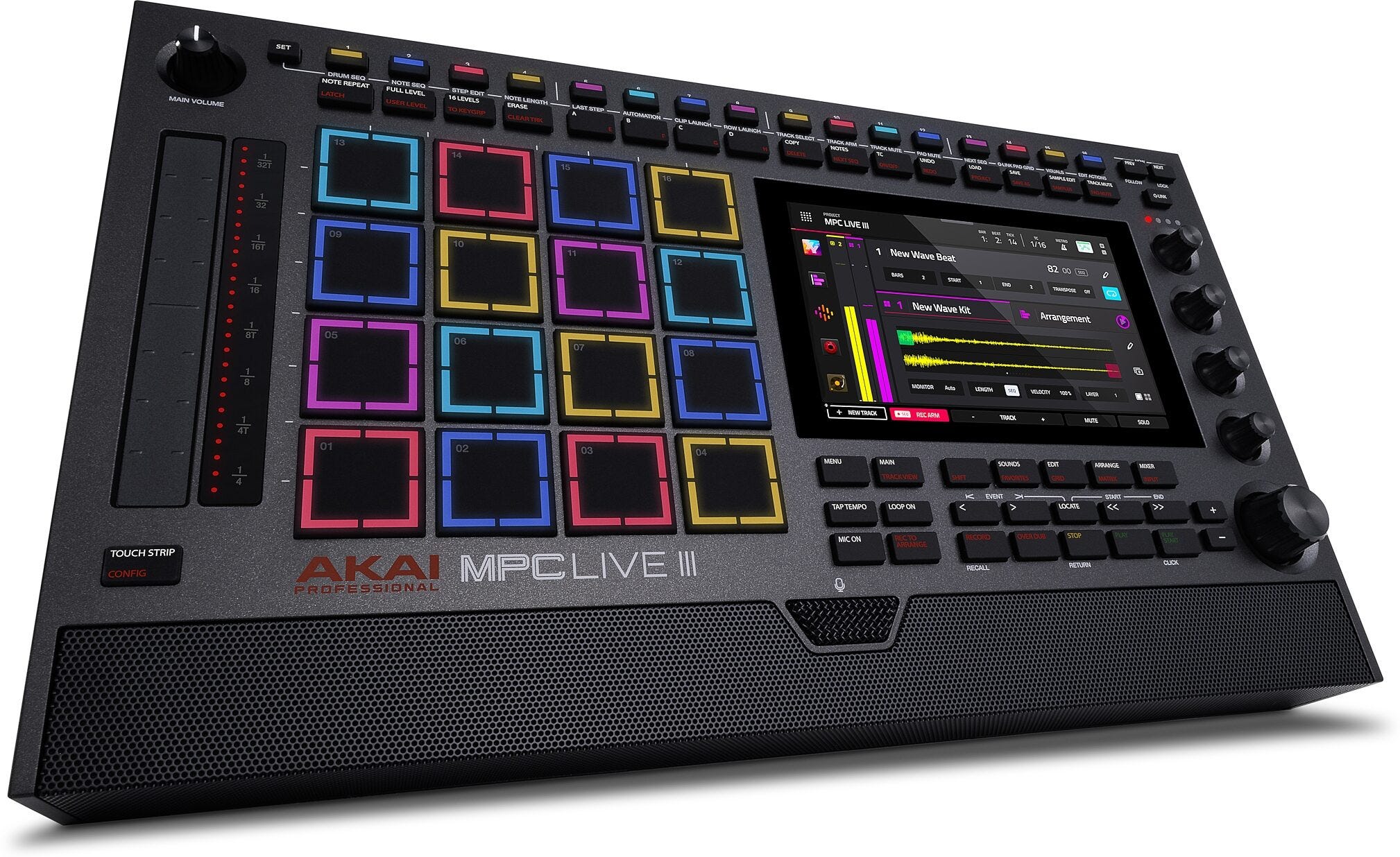
What’s New with the MPC Live III? Specs Don’t Lie
Akai has packed the MPC Live III with a host of new features and upgrades for the MPC line that are sure to have you suffering from a serious case of GAS
Here’s a quick rundown of the most significant changes:
More Power Under the Hood: The MPC Live III features a new 8-core processor and 8GB of RAM, representing a significant upgrade from its predecessor. This means more processing power for your plugins, more tracks, and a smoother, faster workflow.
Massive Internal Storage: With 128GB of internal storage, you’ll have plenty of space for samples, projects, and instruments. And if that’s not enough, you can still expand it with an SD card or an external SSD.
A New Way to Launch: The MPC Live III introduces a new clip launching matrix, similar to what you’d find on an Akai Force or in Ableton Live. This is a game-changer for live performance and for producers who prefer a non-linear workflow.
Expressive New Pads: The new MPCe pads, featuring 3D sensing technology, offer a new level of expression and control. You can now trigger up to 4 different sounds per pad layer and add articulations across the pad's zones, creating an even more expansive palette of sound design opportunities.
Get Hands-On with the Touch Strip: The new assignable touch strip gives you real-time control over effects, note repeat, and other parameters. (Finally, something we can realistically use with the Touch FX plugin!)
TR-Style Sequencing: Step sequencer buttons make it easier than ever to program drums and other patterns in a classic, TR-style workflow.
Built-in Mic and Speakers: The MPC Live III retains the built-in speakers from the Live II but adds an onboard microphone, making recording on the fly even easier
Improved Connectivity: With USB-C for audio and MIDI streaming, you can now sample directly from your computer or iPhone, OR track out up to 24 audio tracks into your DAW for quick mixing.
The MPC Live III also features expanded I/O, including more CV/Gate outputs for controlling modular gear.
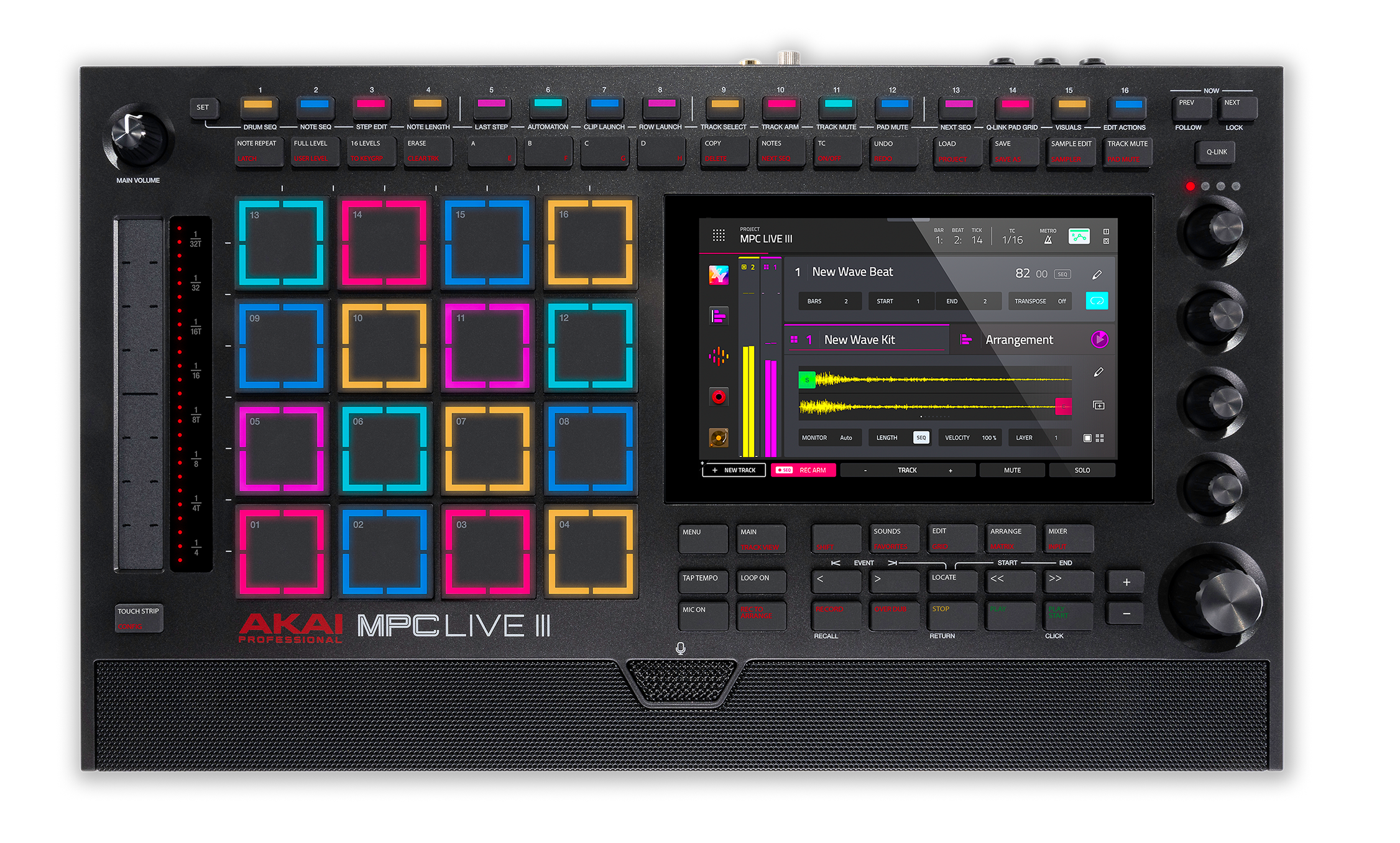
So, What Does This All Mean for Producers?
In short, the MPC Live III is a beast. More processing power and storage mean you can create more complex, ambitious projects without ever touching a computer.
If you’re familiar with the Akai Force or other MPC updates, the new clip-launching workflow shouldn't surprise you.
The expressive pads, however, open new avenues for creativity and live performance where the Force may have fallen short. Improved connectivity also brings back the OG ‘studio centerpiece’ feature of the MPC, making it even more palatable for a fully DAWless workflow.
Like it or not, MPC Live III has something to offer. It’s a powerful, versatile, and inspiring instrument that only scratches the surface of what Akai seems ready to offer.
And with MPC 3.10.1 update, the possibilities that open-source VSTs have to offer are even greater thanks to the expressive pads on the MPC Live III (and MPC XL)

The Verdict: Is the MPC Live III Worth the Hype?
In a word, yes. The Akai MPC Live III is a significant upgrade over its predecessor and a major step forward for standalone music production. And it’s not even the flagship version. It’s not a new coat of paint on an old machine; it’s a completely reimagined, re-engineered instrument finally ready to meet modern producers' demands.
Of course, power, innovation, and convenience come at a price. The MPC Live III is a professional-grade instrument with a professional-grade price tag. But compared to past MPCs, it’s a much more worthwhile investment.
What do you think of the new MPC Live III? Are you planning on picking one up? Let us know in the comments below! And as always, stay tuned to The Practical Audio Lab for more deep dives into the gear that matters.


I would have been satisfied with just the RAM upgrade, Processor Upgrade, XLR Combi jacks and USB C alone with a price tag of $900-$1200. I’m going to hang on to my Live II and Key 61 for now and maybe consider upgrading if I catch a good deal somewhere.