


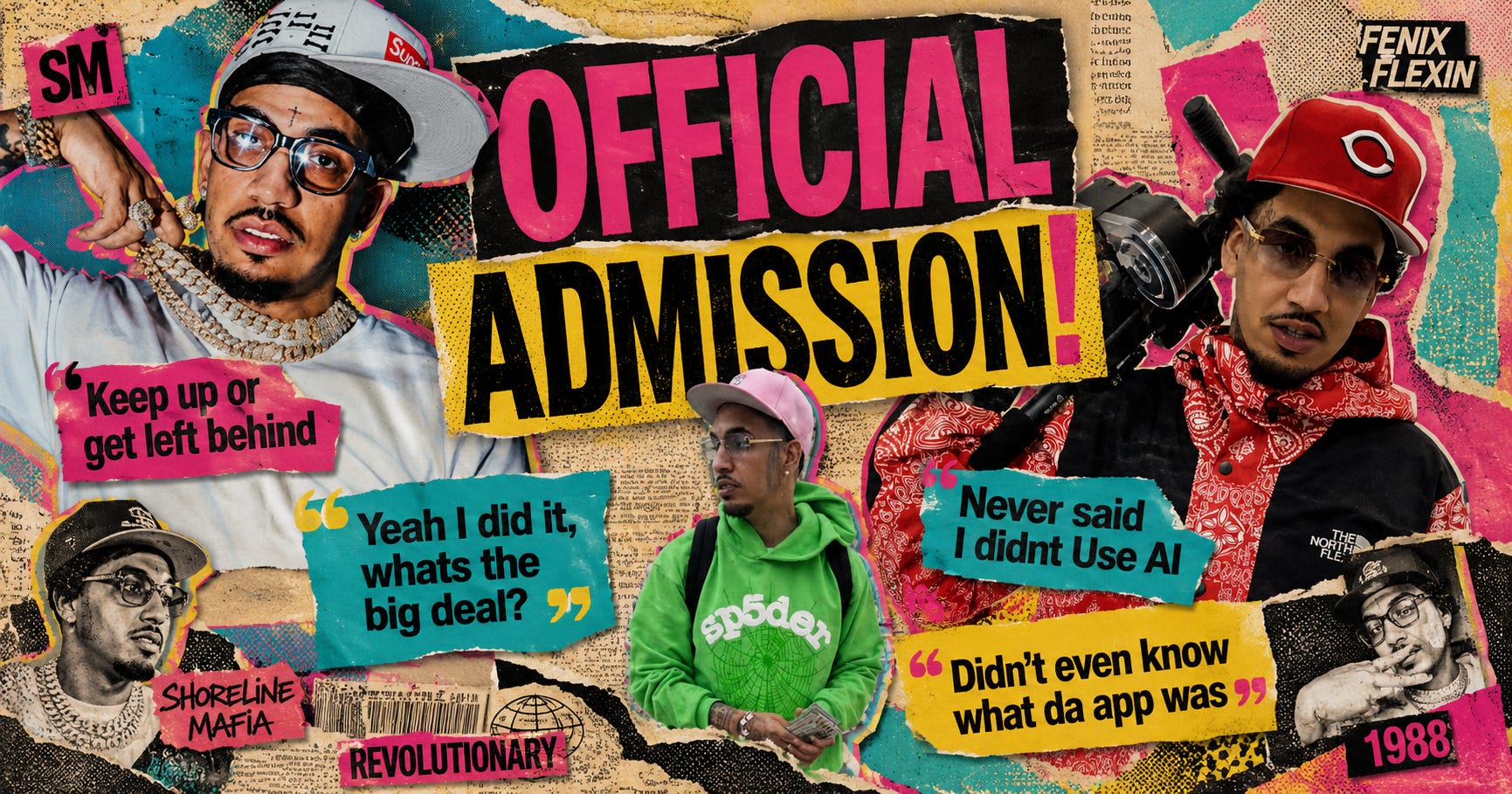
I don’t know if you read my previous article on Fenix Flexin's “RUBBERZ” controversy, but apparently he’s finally admitted he used Treblo audio on his release.
Despite his denials, the track has made history as the first fully AI-generated song to hit the Billboard Hot 100.
Why is this important to PAL?
Well, we’re all about transparency, authenticity, and realness. And my take on this has been that it wouldn’t matter if he was honest from the beginning.

It doesn’t matter what tools you use; what matters is transparency and authenticity.
This should be a lesson for everyone in audio: not to fear the tools of the future, but to embrace them and realize that when you do, you’re embarking on a new mission.
Is what you’re creating really good, or does it sound like the rest of the AI slop that can be found in the marketplace?
And remember, this isn’t just limited to music production; it applies to AI-transcribed podcasts, AI-generated podcasts, AI-generated playlists, etc.
The reason behind the controversy was the quality of the AI-generated track; the quality, combined with common AI triggers, is what generated so much conversation. Without that quality, there is no conversation.
And when it comes to your art.
Conversation is important.
There’s no one-size-fits-all for creation or promotion, but what you can do is learn from the successes and failures of those who came before you and adjust your approach. Eventually, you’ll find an algorithm that is tried and true.
Great quality, combined with authenticity, equals push-button-ready art. Pushing the button won’t guarantee your success; however, the quality, combined with the authenticity, greatly increases your chances.
So if you’re recording a podcast, a content series, your first releases, etc, remember to put out your highest art. AI and all, be authentic and forthcoming about your process.


