

Your Spotify Streams Are Someone Else's Paycheck
Why Spotify's Business Model Is Broken—how your streams are someone else's paycheck and how Independent Artists Can Build Income Without It

Why This Conversation Matters
Whats up lab crew,
I’ve wrestled with this post for weeks, unsure how to tackle it—but ultimately it can’t be ignored. What if music streaming is ultimately doomed to fail? Well, it is.
Recently, I watched Jimmy Iovine’s interview where he predicted streaming would soon be obsolete. While I saw many takes on his comments, I wanted to stay out of it.
Today, Spotify made new comments, prompting me to give context on why I believe Spotify could become obsolete, though streaming as a whole may not.
Still, it’s a topic that needs to be addressed.
So, let’s dive in. This is gonna be a direct and honest discussion, so it’s not for the faint of heart. By the end of this article, you’ll walk away with a clear blueprint for turning streaming’s biggest weaknesses into a foundation for your own income engine. If you’re ready to rethink what music streaming means for your career and learn how to build a new kind of advantage, you’re in the right place.
This discussion is aimed at independent musicians, producers, and those who want real-world strategies beyond introductory advice. If you’re intent on understanding the realities behind music industry economics, this is for you. Practical Audio Lab equips you with unfiltered, actionable insights to build a career on your own terms—not just follow headline trends.
Today’s discussion breaks down some of the central principles shaping Practical Audio Lab: mastery at home, harnessing simplicity, and strategically creating new paths to success.
Executives across the industry have had a strategic, longstanding awareness of this ability of ours for years.
Ultimately, as with all the changes we’ve been seeing in the world, information flow is inevitable.
Information previously held by upper echelons is now available, giving people like us greater agency in our decisions.
Agenda: This article tackles three key questions about music streaming: Why do streaming economics seem broken for artists? Is Spotify’s model doomed or adaptable? What simple methods can independent musicians use for sustainable income beyond streaming? We’ll cover streaming’s evolution, current state, and insider perspectives to answer these questions.
So sit tight. I know this one’s going to be a long read.
Let’s do it.
What Exactly Is Streaming?
Okay, to set the stage, I was recently listening to David Senra’s Founders podcast, and on episode 391, Jimmy Iovine actually says this:
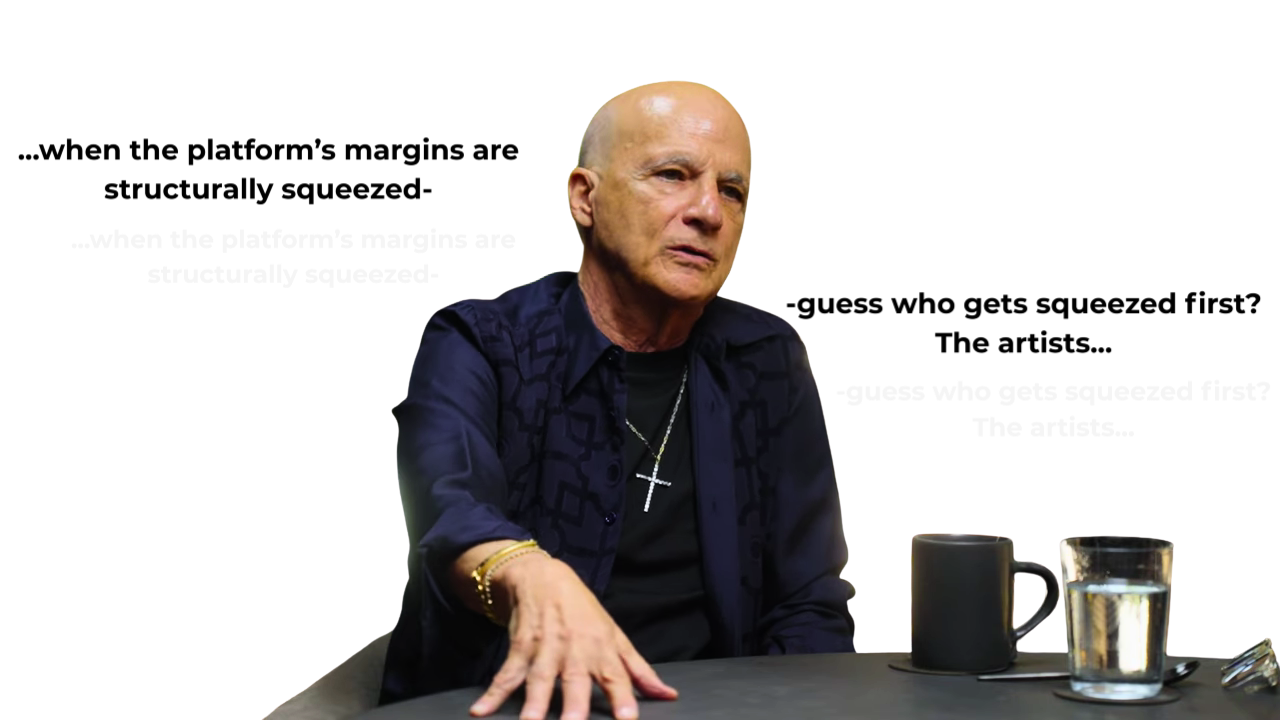
“The streaming services have a bad situation, there’s no margins, they’re not making any money.” This model only works for Apple, Amazon, and Google, because they don’t need their music platforms to be wildly profitable. Amazon uses music as a loss-leader to keep you paying for Prime. Apple uses it to sell $1,000 iPhones. As for Spotify, or any standalone music streaming company, they’re kind of screwed. And guess what -- when the platform’s margins are structurally squeezed, guess who gets squeezed first? The artists.”
And he’s right. Streaming services have struggled financially. Most have thin profit margins and aren’t making much money ( remember the sale of Tidal?). Let’s look at this from a 30,000ft perspective. Global music streaming revenue reached over $17 billion in 2023, yet Spotify reported an operating loss that year. This shows that even as the overall pie grows, standalone platforms still find long-term profitability out of reach (IFPI Global Music Report, 2024).
And Jimmy is right, the streaming model only fits companies like Apple, Amazon, and Google, whose music services don’t need to be highly profitable or even profitable at all. Amazon uses music to incentivize Prime membership, Apple uses it to help sell iPhones, and Google leverages music to support its platforms. Standalone companies like Spotify face far greater challenges, they simply have no ‘what else’ or other offer. .
and subsequently ,when the platform’s margins are structurally squeezed, guess who gets squeezed first.
The artist.
I’ve probably read a thousand think pieces on this, commenting on the artist or the ultimate struggle between platform and creator. I want to offer some perspective.
Now let’s look at exactly what streaming is, why it exists, and why artists believe they need streaming.
Streaming lets users access music over the internet without owning files or physical copies. It differs from buying music, as you pay for continual access rather than a one-time purchase.
Streaming is provided by a music or digital distribution platform that hosts millions of songs on servers and lets people listen on demand, rather than buying physical copies like vinyl or CDs.
This represents a much bigger shift in the music marketplace.
The shift from ownership to access-based consumption.
Why Streaming Took Over the Music Industry
The idea behind streaming was to create a win-win ecosystem by benefiting both creators and consumers. However, in reality, while some artists gain significant advantages, others receive far less, depending on their role within the system.
Consumers benefit first.
For consumers, streaming provides essentially unlimited access.
A flat monthly subscription gives you access to millions of songs instead of having to buy each CD or album individually.
Back in the early 2000s, a single CD could cost around twenty dollars. (CD Prices To Drop, 2003)
Streaming today provides dramatically more value for a fraction of the price.
and simultaneously music discovery has also changed, completely.
Instead of being limited to a store’s stock, we now can discover music instantly via curated playlists, personalized algorirthms and what’s trending.
Streaming also solved another major problem the music industry faced at the time.
Piracy.
Services like Kazaa and Limewire had already changed consumer behavior. Music was easy, fast, and illegally free. Streaming provided a legal alternative that was easier than piracy and faster than retail.
and since convenience beats theft.
And the industry survived because of it.
The Hidden Economics Behind Streaming Platforms
So, that’s how consumers benefit.
But how do the platforms benefit?
According to Source Bridge, one key advantage is the predictability of revenue. With subscription models, companies can more accurately forecast monthly income based on the number of subscribers and the fees they collect.
Streaming companies also collect vast amounts of user data.
This data allows platforms to create recommendation systems and personalized playlists that keep listeners engaged.
As an artist, this is a moment to ask:

Spotify’s model depends on owning and controlling user data and behavior, so consider how you can build your own version of this advantage.
Here are some straightforward ways to take control of your own fan data right now: start by building an email list with tools like Mailchimp or ConvertKit; collect emails at shows, on your website, or via social media links. Send out short surveys to your fans to learn about their interests and what kind of content they want from you. Use direct messages on social media to engage your listeners one-on-one, and ask questions that help you understand who your most dedicated fans really are. Consider using tools like Google Forms or Typeform for gathering feedback and preferences.
When you have this data, you can personalize your content, offer special releases, or invite your most loyal fans to pre-sales or exclusive events. Taking stock of your own fan data assets now will help you see where your leverage lies and what actions you can take to start building a truly independent ecosystem.
Players like Spotify and Apple know that if you’ve spent years building playlists and music libraries inside one platform, you’re very unlikely to leave.
This is incredibly valuable.
But there’s a major catch.
Not all streaming companies operate under the same economic conditions.
Why Apple, Amazon, and Google Can Win at Streaming
Apple Music, Amazon Music, and YouTube Music operate under a completely different model than Spotify.
Music is not their core business.
When Apple launched Apple Music in 2015, it wasn’t just about competing with Spotify or offering a new service. Industry data showed a bump in hardware sales shortly after the rollout, as users who joined Apple Music became more likely to upgrade or stay loyal to Apple devices. The streaming platform made the hardware more attractive, driving core business growth even if the music service operated at a loss. That’s how the loss leader model works—music hooks customers, hardware brings profits.
A loss leader is a product designed to attract customers into a larger ecosystem where the company makes money elsewhere.
Amazon uses music to support Prime.
Apple uses music to boost hardware sales, such as iPhones and Macs.
Google uses music to strengthen YouTube and its advertising ecosystem.
Music helps sell something else.
These companies don’t need their streaming services to be profitable.
The Spotify Problem
Spotify is different.
Spotify’s core business is streaming.
They don’t sell phones.
They don’t sell cloud infrastructure.
They don’t sell advertising networks at Google’s scale.
Spotify must survive on streaming revenue alone.
For years, the company relied on venture capital funding to operate at a loss while building its user base.
The assumption was simple.
Scale first.
Profit later.
But Streaming’s biggest challenge is structural. Nearly 70 percent of Spotify’s revenue goes to rights holders, such as labels and publishers, leaving little profit for the platform. A recent study found that 70 percent of Spotify’s revenue goes directly to rights holders — labels, publishers, and distributors. (Chierchio, 2026)
That leaves extremely thin margins for the platform itself.
Here’s where the real trap lies: streaming platforms face a structural cost paradox. Unlike most software businesses, where costs drop as usage climbs, in music streaming, costs spike with every additional play. Each time a song streams, another licensing payment is triggered. The very thing that should signal business success—more engagement and more listening—actually adds to expenses. So the more successful Spotify becomes, the more expensive it gets to operate.
How Artists Are Actually Paid on Streaming Platforms
Now let’s talk about the royalty system.
Most streaming services use a pro-rata model.
Think of it like a giant jar.
All subscription money goes into the jar.
All streams go into the jar.
At the end of the month, Artists are paid based on their percentage of total streams.
Meaning if you get a large number of plays, then you get a large check
Subsequently, larger artists capture the majority of the revenue.
Even if a listener never plays those artists.
Imagine paying eleven dollars a month and only listening to your favorite local band.
Your subscription still contributes to the global revenue pool dominated by major artists.
Meaning your listening habits may not determine where your monthly payment actually goes, disconnecting listener choice from artist compensation. structural flaw.
or in simpler words,
Nine out of your eleven dollars went to ________(insert your most hated top 10 artist)
The User-Centric Royalty Model
Some artists and industry analysts have proposed an alternative.
The ‘user-centric’ payment model.
Instead of one giant global pool, each user’s subscription fee is allocated only to the artists they listen to.
If you only listen to one independent band, that band would receive the majority of your subscription revenue.
This system is often called fan-powered royalties.
If you want to see what this would mean for you, try this quick exercise:
Grab your recent monthly stream count and total up how many streams each artist you listened to actually got from you. Now imagine your entire subscription fee went only to those artists, split up by your listening. How much would your favorite independent band have earned compared to the current global pool model? Doing this simple calculation can give you a real sense of how the user-centric approach would affect your own impact as a listener or your earnings as an artist.
For musicians, understanding how this calculation works isn’t just eye-opening on a personal level—it can directly shape your strategy. If most of your fans are true supporters, listen to your music and pay for streaming. Yet, most of their streaming revenue goes to the biggest artists. You might decide to advocate for a user-centric model, urging your fans to strategically focus their streaming habits, or build campaigns to educate or influence your audience to stream. Knowing these numbers can also guide your business decisions, like whether to invest more in direct-to-fan options, exclusives, or alternative revenue streams. By doing this exercise, you’ll uncover exactly how your relationship with fans can translate into revenue in different royalty systems, and where your advocacy and efforts might have the most impact.
It aligns payments with listener behavior.
But it also introduces its own economic complexities for platforms.
Which is why it hasn’t replaced the existing system yet.
The Bigger Lesson for Independent Musicians
And this brings us back to the bigger picture.
The music industry has long known that music itself is not the primary profit center.
Jimmy Iovine knew this.
Major labels knew this.
Executives like Lyor Cohen knew this.
Music has often functioned as a marketing engine for other revenue streams.
Touring.
Merchandise.
Brand deals.
Experiences.
Even technology ecosystems.
That’s why the 360 deal emerged. In much the same way, today’s creator economy is built around artists diversifying their income streams—whether through merch, brand partnerships, or exclusive content. The logic hasn’t changed: musicians aren’t just selling music, they’re building an ecosystem of value around themselves.
Labels wanted a share of every revenue stream surrounding the artist.
Not just the recordings.
The Strategy Independent Artists Should Be Thinking About
So, as musicians, we have to think in the same way.
Sometimes we’re so hyper-focused on creating the music that we overlook what actually draws people in to listen for the first time. That’s where loss leaders come in—they are accessible, valuable offerings you put out into the world to pull people into your orbit and introduce them to the music itself. Loss leaders matter because they lower the initial barrier for new fans, create memorable moments, and give listeners a reason to connect with your broader creative work. To make this easier, think of loss leaders in three simple categories:
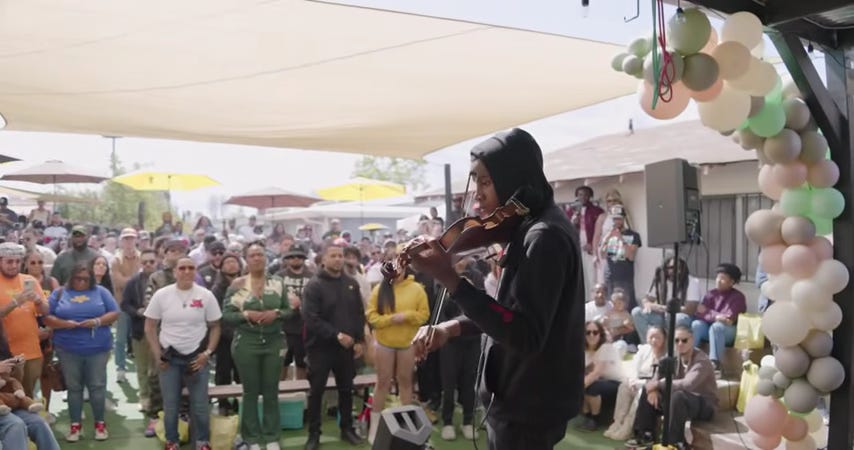
1. Experiences: Host a low-cost house show or pop-up listening party, maybe even paired with food or a small art showing. For example, playing a free acoustic set at a local coffee shop can attract new ears and create a personal connection.


2. Content: Share engaging videos, launch a podcast episode discussing your music journey, or post behind-the-scenes footage from a recent recording session. For example, a series of stories on social media that document your songwriting process offers fans something special and invites them into your world.
3. Creative Goods: Create and give away zines, limited-edition stickers, a free sample pack, or downloadable lyric sheets. For instance, emailing a free digital mini-EP to people who sign up for your mailing list turns casual curiosity into deeper engagement
.
No matter what, you have to have something you create, something that draws people toward the music. If your music is a high-value product, you still need something accessible that introduces people to it.
That is your loss leader.
What if streaming was never designed to make musicians rich? Would your strategy change if you knew that was the case? If you recognize that streaming platforms are primarily designed to deliver convenience to listeners, not to maximize artist income, it’s time to adjust your approach.
Instead of chasing streaming royalties as your main goal, think about how you can use streaming as an entry point to attract new listeners, then guide them toward more direct and rewarding connections with your music. This means focusing on building genuine fan relationships, leveraging loss leaders, and creating unique value that goes beyond a play count.
Start viewing streaming as just one part of a bigger ecosystem that supports your career, not the end destination.
This is one of the most persistent myths in the modern music industry.
again, streaming platforms were not built to maximize artist income. (Ramesh, 2024, pp. 1-8)They were built to solve piracy and deliver convenient music access.
Artist monetization was always going to require additional revenue streams beyond streaming royalties.Understanding that reality changes how independent artists should approach their careers.
Practical Takeaway
If you remember nothing else from this article, remember this.
• Leverage music as the entry point, not the primary revenue stream
• Build platforms that thrive through ecosystems, not just streams
• Design your own independent ecosystem as an artist
Final Thoughts
When you really look at the numbers and the model, it’s tempting to decide outright that Spotify is going to die. But the future isn’t carved in stone. Here’s how I see it: there are two scenarios ahead for Spotify. One is collapse—Spotify’s standalone streaming model proves unsustainable, and eventually the company either folds, sells, or gets absorbed by a bigger ecosystem. The other is reinvention—Spotify pivots, partners up, or finds new revenue streams beyond streaming to stay alive, maybe even changing what the company means at its core.
Either way, it’s clear that the days of relying on endless funding to cover unsustainable losses are numbered.
Netflix will eventually face similar pressure.
It may look stable from the outside, but these models are more fragile than most realize.
the most resilient models will be those that give artists direct access to fans and allow them to build their own ecosystems.
They pay their $9.99, and they create, and people support them.
That’s what’s going to survive.
And that’s why Today is the day for artists to know that you don’t need Spotify.
You don’t need Apple Music.
All you need is a loss leader.
something low-cost to you but high-value to your customer that brings them into your ecosystem.
which eventually leads them to your high-quality music.
So is Jimmy Iovine right?
Yeah.
He’s right.
He’s been right for years.
You should probably pay attention.
He’s telling you what artists like Larussel, Rus, Taylor Swift, Curtis King already know.
You can make it independently.
100%
FAQ
Is Spotify profitable?
Spotify has historically struggled with profitability because about 70% of its revenue is paid to rights holders such as record labels and publishers. (Chierchio, 2026) This leaves the platform with thin margins and makes scaling the business financially difficult compared to tech companies that use music as a loss leader.
Why do streaming platforms pay artists so little?
Most streaming services use a pro rata royalty model, in which all subscription revenue is pooled and distributed based on each service’s total stream share. Because large artists generate the majority of streams, they receive the majority of payouts even if individual listeners never play their music. For context, the average per-stream payout from Spotify is estimated to be less than half a cent—typically around $0.003 to $0.005 per stream. This means that a song would need to be streamed over 200,000 times just to earn the equivalent of $1,000, revealing just how little most artists see from streaming, even when their music reaches real audiences.
What is a loss leader in the music industry?
According to AP News, the European Union recently fined Apple nearly $2 billion for giving its own music streaming service an unfair advantage over competitors such as Spotify, highlighting the ongoing competition among major platforms like Apple and Amazon in the music streaming market.
A user-centric model distributes each listener’s subscription fee only to the artists they actually listen to. This contrasts with the current pro rata system, which pools all revenue globally.
Do independent artists need streaming platforms?
Independent artists can use streaming platforms for discovery, but long-term income often comes from direct-to-consumer models such as memberships, merchandise, performances, or digital communities.
Totally agree with all this. I'm a recording artist / composer who has managed to build it into a business over the the past 20 years.
When I release new music, I never mention that one DSP. I act like it doesn't exist. They're on the downhill slide, anyway.
22 years ago, when I started releasing music, it was a creative thing. It was also to understand the new world of digital distribution. The idea that anybody would create and release music with the sole intent to "make money" is amusing to me. If you were a touring band or somebody trying to make the big time, well, that's a different thing, although Steve Albini's "The Problem with Music" was still in effect then. Be careful what you sign... and what the doctor prescribes.
Artists could promote other DSPs, but most don't. They don't even know they exist, much less what YouTube Music pays. I look at my Pivot Tables. They could do Bandcamp listening parties, but they don't. Because they're so desperate to be famous, they do even dumber things like buy ads to promote their music on one streaming site. About the only people who win that game are the billionaires.
They dismiss radio. They act like nobody listens to it. And I bet none of them couldn't tell you how much a rights holder earns for a single 7 day checkout on Hoopla. They make fun of Pandora, with 40+ million monthly users and 6 million hardcore subscribers. They ignore Sonos Webcasting. Too lazy to pitch a music library. They ask questions like "What's a PRO?" - it's something you buy on Figueroa Street, kid...