

🧪 LAB REPORT #3 Compression Settings Every Producer Must Master
Taming Your Dynamics with Ratios, Thresholds, and Knee

The 3 Compression Settings Every Producer Must Master
"Compression isn’t about making things louder—it’s about making your sound more consistent." — Will (SOVLTRON)
INTRO: Why This Matters
Do your mixes feel too loud in some spots and too quiet in others? The problem isn’t your ears—it’s your dynamic range. And the fix is compression.
One of the biggest frustrations producers face is balance: vocals vanish, drums hit unevenly, and the 2-bus feels weak or crushed. This week, we’re breaking down the three core compression settings—threshold, ratio, and knee—that will transform your mixes from messy to controlled.
1. THE PROBLEM
An untamed dynamic range (the difference between the quietest and loudest parts of a signal) makes your mix unstable.
Common results:
Vocals disappearing in the mix.
Drums hitting inconsistently—too loud here, too soft there.
A 2-bus that feels weak, squashed, or just not hitting how you want.
And the big misconception?
"Compression isn’t about making things louder. It’s about making things more consistent."
2. THE PRACTICAL FIX
Here’s how to actually use compression with confidence:
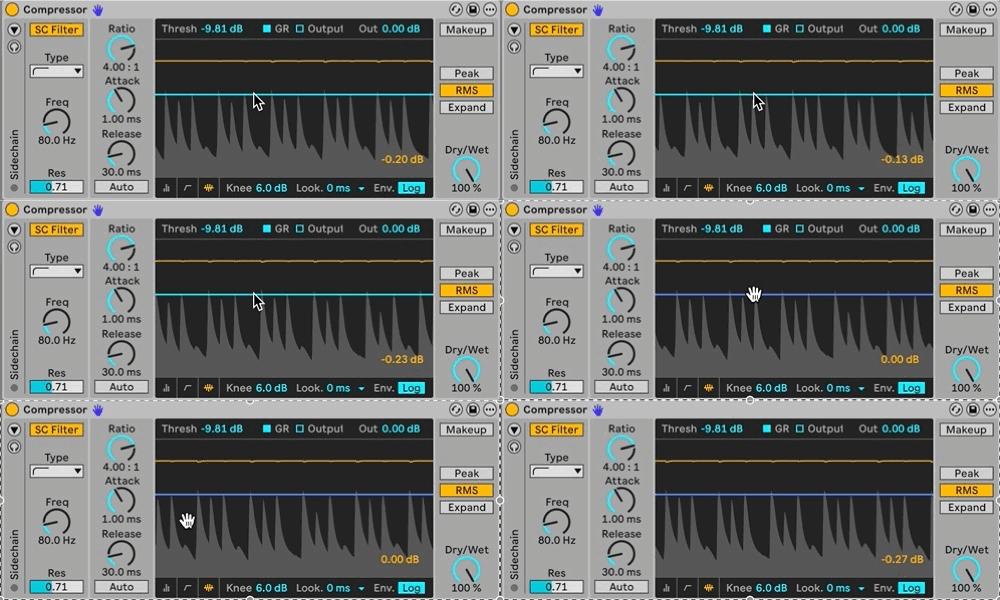
Tactic 1: Threshold
Think of the threshold as your “volume ceiling.” Once your audio crosses it, the compressor turns it down.
For vocals: Catch only the loudest peaks.
For drums: Tame the transient “thwack.”
Pro tip: Lower your threshold until it sits just above the average peak you want to control.
Tactic 2: Ratio
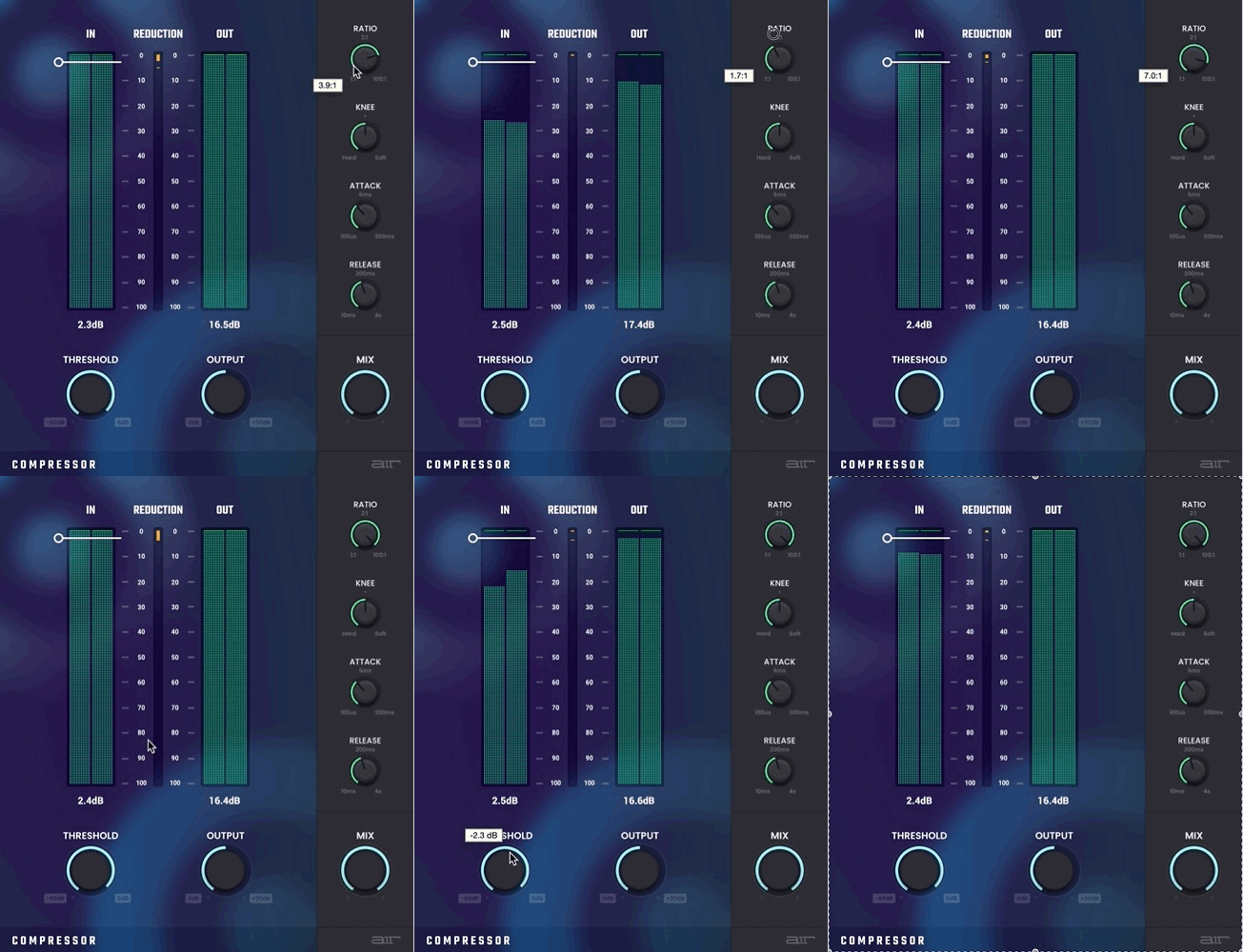
The ratio tells the compressor how much to reduce once the threshold is crossed.
3:1 ratio → every 3 dB over the ceiling becomes 1 dB out.
Gentle ratios (2:1 to 4:1): transparent compression for vocals, bass, or 2-bus.
High ratios (8:1 to 10:1): aggressive control for wild peaks or parallel compression.
∞:1 = limiting. Nothing passes above the threshold.
Tactic 3: Knee
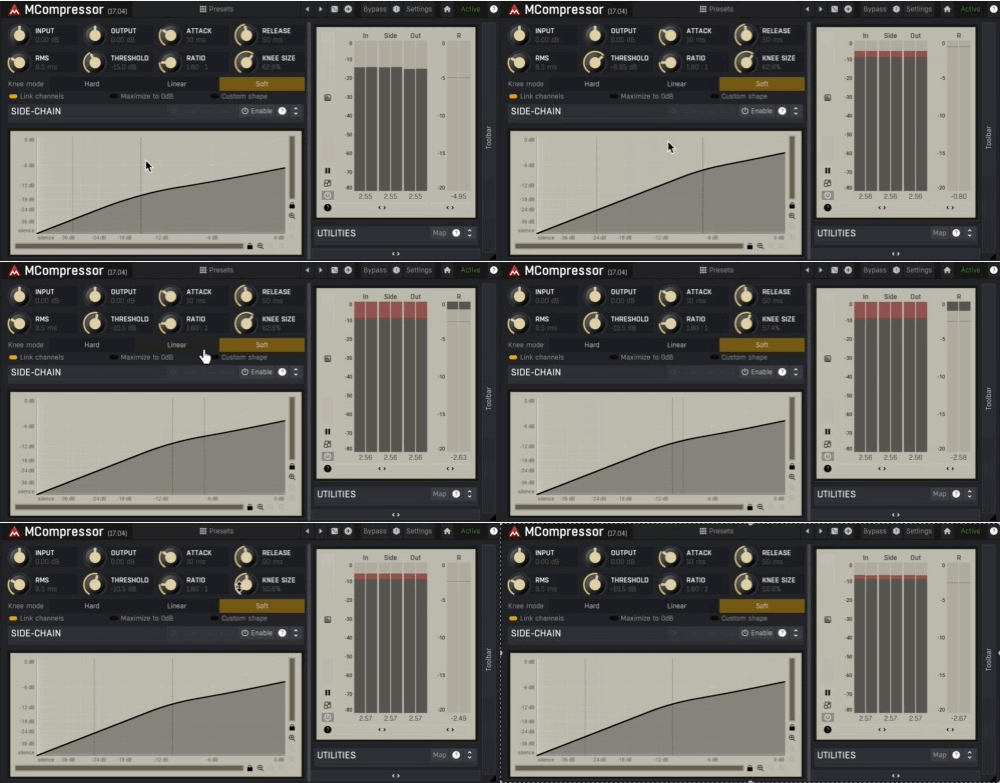
The knee controls how compression kicks in.
Hard Knee: Immediate, aggressive response. Punchy and obvious.
Soft Knee: Gradual, smoother response. Musical and natural.
Variable knees let you dial in exactly how much character you want.
3. WHAT TO DO NEXT
Try this quick exercise in your next session:
Insert a compressor on your lead vocal.
Lower the threshold until you see about 1–2 dB of gain reduction on the loudest words.
Experiment with ratios: start with 2:1, then increase and compare.
Adjust the knee: switch between hard and soft, and listen to how the feel changes.
This simple test will train your ears to recognize how each control shapes your sound.
📥 BONUS RESOURCE FOR LAB MEMBERS:
🎁 [Download: Compression Session Files] — Includes my lead vocal stem, go-to compressor settings, and a step-by-step walkthrough of my input/output approach.
🔓 NOT A MEMBER YET?
Unlock bonus tools, behind-the-scenes posts, mix feedback, and exclusive sample drops. [Join the Lab →]
💬 DROP A COMMENT
What’s your go-to compressor—and what’s the trick you always use with it? I’ll feature the best answers in a future Lab Report.
— Will (SOVLTRON)