


Hardware & Portability: Build Quality on the Go
What’s up, Lab Crew,
IDK what's up with the team at AKAI, but I’m loving it. After investigating a pretty sus looking eBay post delivered to the MPC groups, I'm pretty certain that this upcomming Akai release is real.
*(update this has just been released today)


One of the biggest talking points in the MPC ecosystem is what you’re getting for the price. Compared with the features offered on the MPC nowadays, those available just twenty years ago would have cost tens of thousands of dollars. Akai has done an amazing job of providing an excellent reusable product like the MPC at a relatively decent entry point ($799 USD).
Welp, looks like AKAI is disrupting their lineup again
Highly confident that this will be a real release in the upcomming weeks, ladies, gents, and cents. We present to you
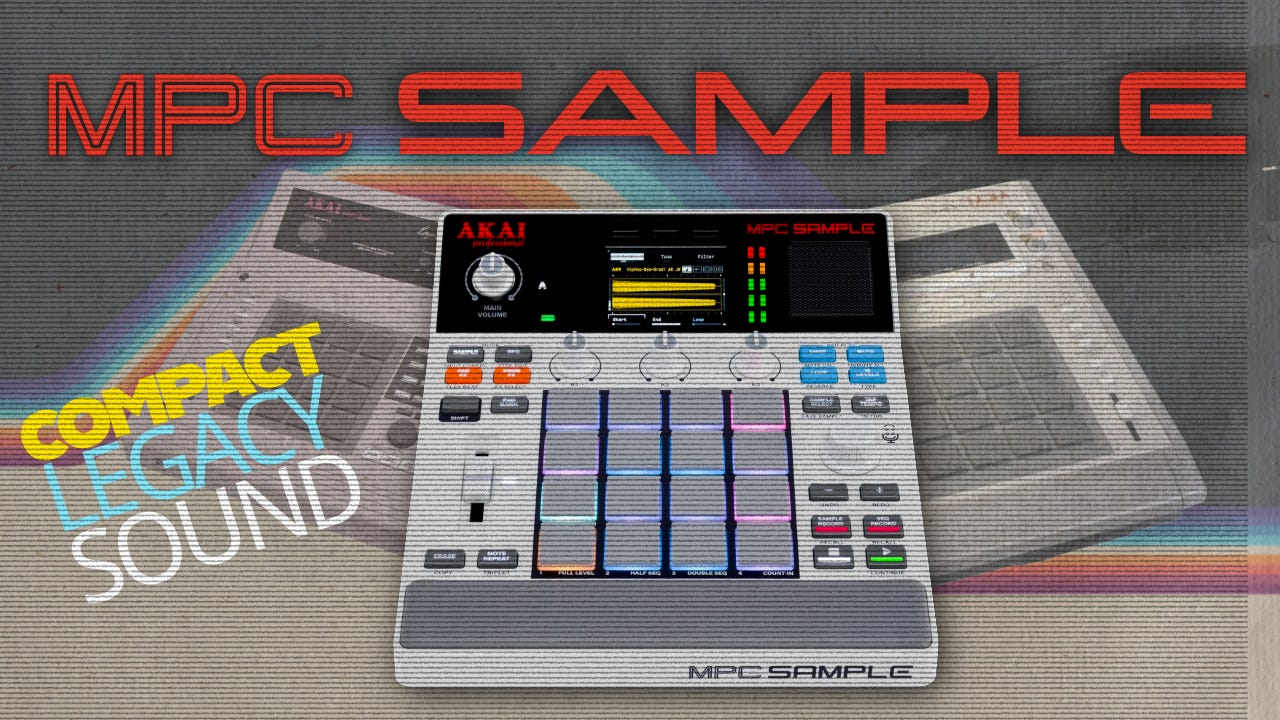
The MPC Sample
Retailing at almost half the price of the lowest-priced MPC, at $399, the ultra-portable MPC Sample strips away the bloat and heavy software load of the flagship MPC XL and Live III and instead offers a laser-focused, sample-based, battery-powered homage to the raw sampling ethos of legendary samplers like the MPC60 and MPC3000.
But just because it’s most reasonably affordable, doesnt mean you should just run out and buy it..
Why?
Besides the fact that it’s not available yet, or that AKai hasn’t even announced it
(update - announced for release on March 24 2026), We still need to complete our evaluation and then reach our final conclusion.

The MPC Workflow: Sampling, Slicing, and Sequencing
To fully grasp the appeal of the MPC Sample, let's look first at what it intentionally leaves out. Most recently, most Akai devices have become small computers, with the exception of MIDI controllers; most MPCs and the Force can run multiple VST-style plugins, support complex vocal manipulation, and enable deep synthesis and modulation.
The MPC sample is a hard pivot in the other direction. It's a dedicated sampler in the same style as SP-404 and Teenage Engineering’s EP-133 KO II.
So here is what we know so far:


Akai MPC Sample FAQ
What is the MPC Sample?
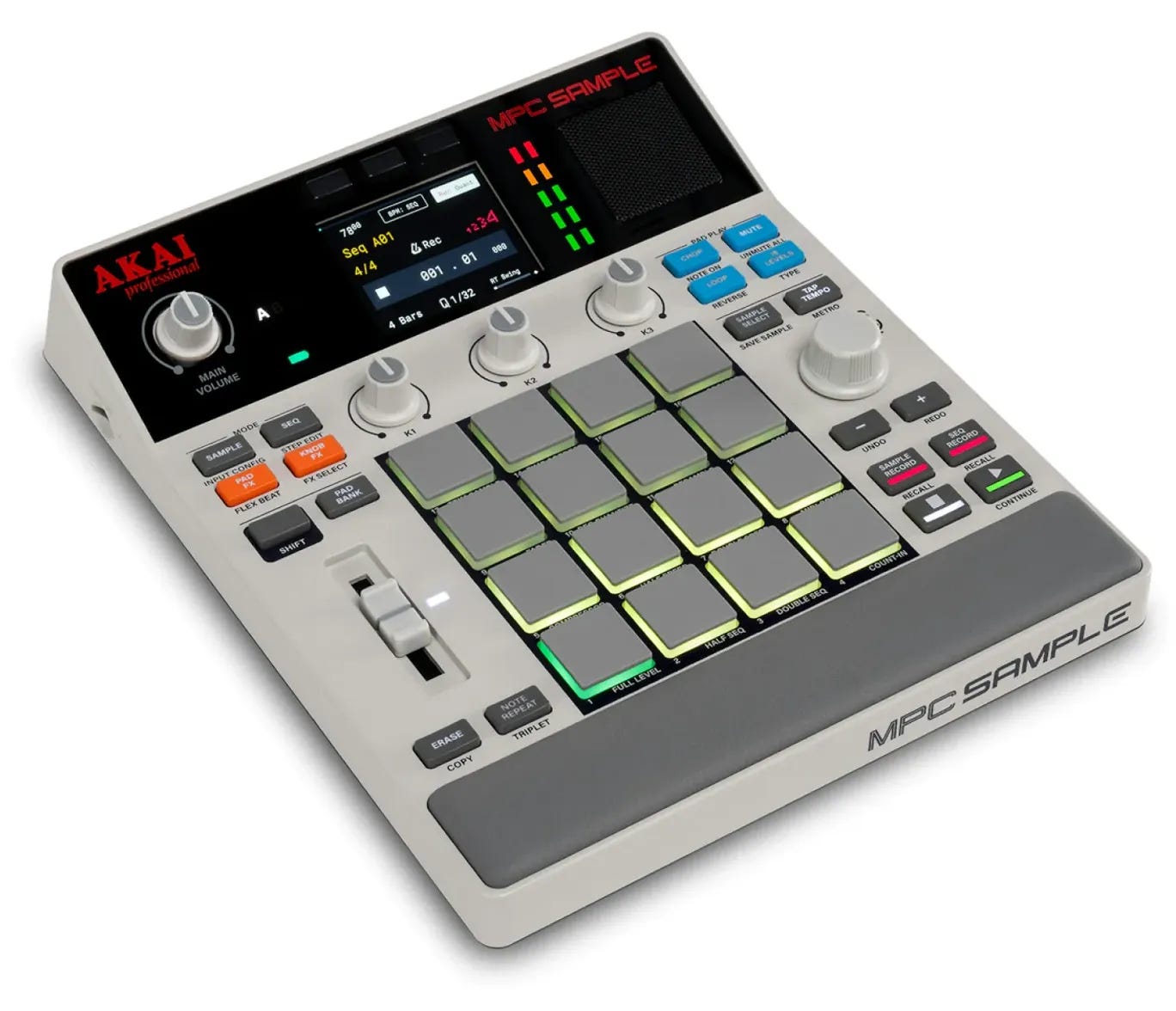
The Akai MPC Sample is a portable, standalone hardware sampler priced at $399. Designed as a straightforward, low-cost entry point into the MPC ecosystem and workflow, it features the classic MPC 16-pad grid, a full-color display, a rechargeable lithium-ion battery, an internal microphone, and a microSD slot. Unlike the flagship MPC offerings, it focuses only on audio sampling, sequencing, and built-in effects, omitting complex plugin engines t o provide a streamlined, DAW-less beatmaking experience.
What are the Features?
The MPC Sample comes ready with a rechargeable lithium-ion battery, a microSD card slot, an internal microphone, a built-in speaker, and a USB-C connection. Full-color 2.4” display, 16 responsive MPC Pads, four internal FX processors with dedicated knob control, 60 different FX types, I/O for studio and Live Use, 1/4” TRS Line out, 1/8” headphone out, MIDI in/out (via 1/8” to MIDI DIN adapter), sync out.
Does the MPC Sample require a computer or DAW?
No, since this has a rechargeable lithium-ion battery and Micro SD card storage, you can record, edit, and playback audio on the go with no computer or DAW required. If you want to sequence a song, utilize the onboard sequencer, or record a sound? Internal built-in microphone
How long does the battery last?
The MPC Sample battery is slated for around five hours of continuous use.
What are the storage and memory specs?
2GB RAM
8GB Internal Storage (expandable by microSD)
File transfer via USB-C
What pads does the MPC Sample use?
The MPC Sample uses RGB-backlit velocity-sensitive MPC pads with poly aftertouch.
What effects and kits are included?
The device ships with over 100 factory kits spanning genres such as house, hip hop, drum and bass, and lo-fi, along with four onboard effect engines featuring 60 effect types. Effects include granulator, ring mod, lo-fi, delay, reverb, half speed, flanger, chorus, phaser, beat repeat, and more.
Can I chop and time-stretch samples on the MPC Sample?
Absolutely, the MPC Sample includes ‘instant chop mode’ for automatic slicing, real-time time-stretching, and pitch control. Plus internal resampling.
What are the connectivity options?
USB-C
MIDI to DIN
1/4” TRS out
1/8” Headphone Out
Akai MPC Sample vs. Competitors (2026 Comparison)
How does the MPC Sample compare to the Roland SP-404MK2 and Teenage Engineering EP-133 KO II?
All three samplers are standalone and portable, and they fall within the same price range. The MPC Sample differentiates itself with the classic MPC pads and poly aftertouch. Plus the Legacy MPC workflow. While the SP404 has stronger live performance applications and the EP-133 KO II leans towards eclectic lo-fi, the MPC Sample will find its place in whatever you choose to create. Remember, its inspiration is its predecessor, its own grandfather.
Is the MPC Sample Part of the Full MPC Ecosystem (plugins, expansions, etc)
Based on current information, the MPC Sample is a standalone sampler, not a full MPC OS, so some expansion features may not be supported. AIR expansions do not appear to be supported the same way as the MPC Live III or MPC XL, though projects can be transferred to MPC3 software for further production.
Who is the MPC Sample Designed for?
This is designed for beginners and enthusiasts alike. Akai's goal is to make the art of sampling more accessible and approachable than before.
Can I use my MPC sample projects in the MPC software?
Yes, projects created on the MPC Sample can be opened directly in Akai’s MPC3 software, making it a solid bridge between portable and studio workflows
Pros & Cons: The Honest Truth
All right,
so what’s our take on the MPC Sample? Well, for years, producers have whined and complained and hollered and moaned about the converters and the sound on the MPC, and it didn’t sound like the old vintage MPCs. So finally, Akai has given these producers exactly what they’re asking for: something that competes and offers the features of those exact MPCs, in a price range that fits where those producers are today.
Ultimately, I am considering getting this device for my nine-year-old daughter. Why? Because I think it’s a great introduction into the NPC family, and I think it’s a super user-friendly way to start creating their own music, especially sampling their own sounds.
For example, I saw her struggling to bring an idea to fruition in a van lab. But the simple loop she had made by sampling her sister. If she had done this on the NPC, I feel like she would have been quickly making music in a matter of minutes, rather than struggling with the software, in order to just create something cool.
So I think this is a great introductory machine for people who are looking to create beats and start expressing their ideas musically. Really quickly. Right. For people who are looking for something that is... retro and sounds vintage, and gives you the feel of the older NPCs.
I would encourage those people to stop chasing nostalgia and just go buy one of those older machines. Oh, today. Ultimately, this is a great alternative for people that want to stay inside of the a kite, ecosystem, and benefit from having another sampler, like an SP 404, is it necessary?
No. Is it a great offering? Absolutely.
Is it for you? You decide.
I'm still a korg fanboy so I'd choose an ESX but I have fond memories of my MCP2K. Too bad it was huge and heavy and I had to sell it to make probation payments. Also Zip drives are lame.